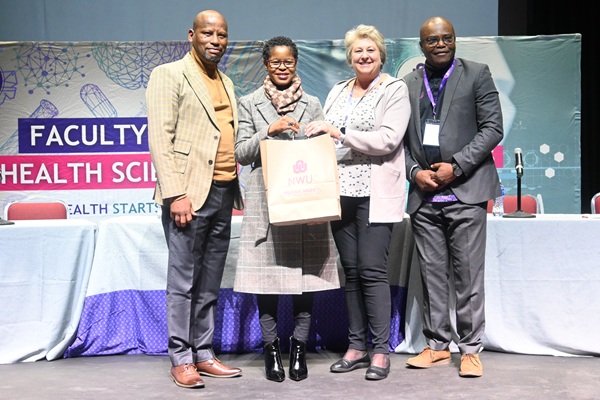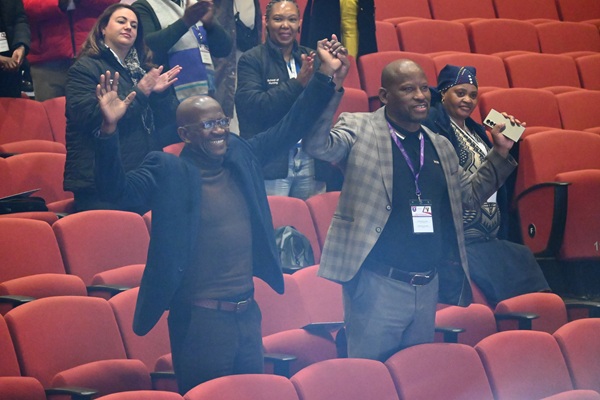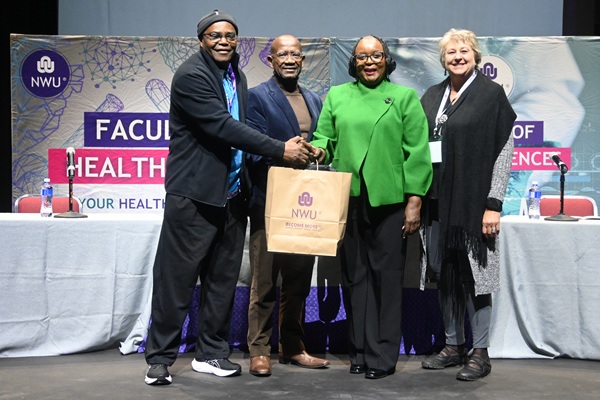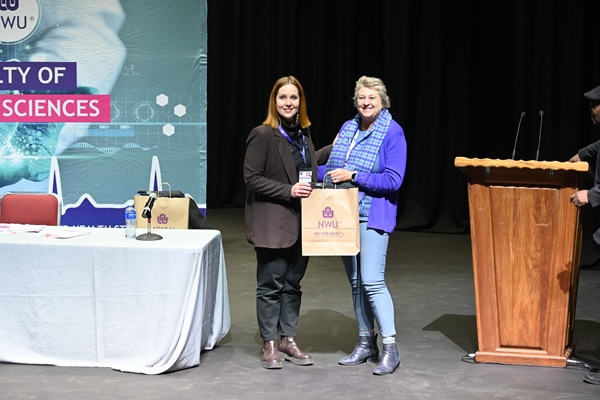
For many who grew up in the 1990s, Captain Planet was the environmental superhero who could only be summoned when five young Planeteers united the powers of earth, fire, wind, water and heart.
It was this familiar image that Prof. Habib Noorbhai, deputy dean for research, innovation, community engagement and postgraduate studies in the Faculty of Health Sciences, used to describe the Faculty of Health Community Engagement Champions and delegates at the African Community-Led Knowledge Co-Creation Conference.
The conference was hosted by the North-West University's (NWU's) Faculty of Health Sciences from 7 to 9 July 2026on the Potchefstroom Campus, with Prof. Ushotanefe Useh at the helm of the local organising committee.
Prof. Noorbhai’s message was simple yet powerful. Lasting societal change cannot be achieved by one sector acting alone. Universities, communities, government, researchers and students each hold an important piece of the solution, but it is the heart for people that brings meaningful partnerships to life. He also appluaded Prof. Useh for his leadership role.
The conference gave practical expression to the university's vision of discovering new frontiers and opportunities that benefit society, while reflecting its mission to do so through the provision of knowledge, excelling in innovative teaching, cutting-edge research, and focused community engagement.
Over three days, academics, community leaders, government representatives, students and development partners from across South Africa explored how collaborative knowledge creation can strengthen communities, inform policy and translate research into meaningful societal impact. Discussions focused on youth empowerment, sustainable partnerships, skills development, accessibility and health and wellbeing while advancing the United Nations Sustainable Development Goals and the African Union's Agenda 2063.
Opening the conference, Prof. Alida Herbst, deputy dean for teaching and learning, welcomed delegates by reflecting on how our histories and present realities shape the way we engage with the world. She said sustainable progress requires authentic engagement and described the conference as a bold step forward in creating solutions through collaboration.
"The next few days offer an invaluable opportunity to create solutions," she said.
Prof. Herbst emphasised that knowledge should be created with communities, not simply for them, setting the tone for discussions that positioned communities as equal partners in research.
Speaking on behalf of deputy vice-chancellor Prof. Jeffrey Mphahlele, Lester Mpolokeng, director for sustainability and community impact, described the university as a "community synergy university", saying delegates had gathered as co-creators of knowledge united by a shared commitment to advancing research that responds to society's needs.
His remarks reinforced the university's commitment to partnerships that extend beyond academia and into the communities it serves.
Delivering the keynote address, “The impact of university-driven projects or programmes on rural communities: The case study of NWU and Lokaleng Village, Mahikeng”, Dr Lefenya-Motshegare challenged researchers to reflect critically on the purpose and relevance of their work.
"Are we talking to ourselves, or are we talking to communities?" she asked.
Drawing on the experiences of Lokaleng Village, she demonstrated how research delivers greater impact when communities become active contributors rather than passive participants.
The conference also celebrated culture through vibrant performances by cultural dancers, whose storytelling and traditional performances reminded delegates that knowledge is not confined to lecture halls or laboratories.
The second day shifted the focus towards sustaining partnerships through the philosophy of Ubuntu.
In her keynote address, “Weaving together: Sustaining communities through Ubuntu-led co-creation”, Prof. Fhumulani Mavis Mulaudzi, South African Research Chair in the Ubuntu Community Model of Nursing at the University of Pretoria, encouraged delegates to embrace collective responsibility in addressing societal challenges.
She emphasised that people thrive when they are empowered to participate and experience a genuine sense of belonging, reminding delegates that universities need communities just as communities need universities.
The day's abstract presentations and panel discussions expanded on these themes through conversations on capacity building and skills development, accessibility, sustainability and lessons learned from community partners. Together, they demonstrated that impactful research extends beyond academic publications to create practical solutions that strengthen communities.
The conference culminated in a keynote address by Dr Ndivhuwo Luruli, chief strategist at the National Research Foundation, titled "Including communities for effective research communication for project outcomes and research impact". Her address reinforced the importance of involving communities throughout the research process to strengthen project outcomes, improve research impact and ensure that research delivers meaningful benefits for society.
Expanding on the themes of her keynote, Dr Luruli shared further insights with NWU Newsroom's Belinda Bantham after her address.
"It is not only about speaking a different language. It is about simplifying the message," she said. "Researchers often keep the communication too scientific instead of breaking it down into language that anyone can understand. If you do not use the right language, you lose the message."
Dr Luruli said researchers should also communicate the value of their work by helping communities understand why the research matters and how it connects to their everyday lives.
"People need to understand what's in it for them and why they should care," she said. "Research becomes meaningful when communities can see how it affects their livelihoods and daily experiences."
She also highlighted one of the biggest challenges facing the research sector: measuring meaningful impact.
"It is the people you work with who can tell you whether there has been an impact and where they see that impact," she said. "Developing meaningful ways to measure community impact remains one of the biggest challenges we still need to address."
Students also welcomed the opportunity to engage directly with researchers, community leaders and policymakers, broadening their understanding of community-engaged scholarship and their future role in creating research that responds to society's needs.
As the conference ended, one message stood above all others. The most impactful research does not happen in isolation. It happens when universities listen as much as they lead, when communities become equal partners in creating knowledge, and when government, researchers and students work towards a common purpose.