
National Women’s Day commemorates the 20,000 women who marched to the Union Buildings in 1956, giving us the powerful words: “Wathint’ abafazi, wathint’ imbokodo” – “You strike a woman, you strike a rock.” But I sometimes wonder whether we remember only the determination of those women, or whether we acknowledge the more uncomfortable part of our history: they were not asking to be recognised. They were demanding that a system change.
Today, Women’s Day is wrapped in inspiring words such as strength, courage, resilience and empowerment. These words are true, but when we use them too often as pleasant, feel-good expressions, they lose their meaning. Women do not need another day on which they are praised for surviving. We need a country, government, families and workplaces where women are no longer expected to survive what should never have been placed on their shoulders in the first place.
A recent South African gender-based violence study found that 35.5% of women aged 18 and older have experienced physical and/or sexual violence. This is not just a statistic. It represents almost 7.85 million women. It confirms that Women’s Month cannot be about flowers and applause. It must be about safety, dignity, justice and the courage to confront the conditions that still make too many women vulnerable.
The women led by Lilian Ngoyi, Helen Joseph, Rahima Moosa and Sophia Williams-De Bruyn did not march so that future generations of women could be called strong while still carrying unfair burdens. They marched because they believed ordinary women could confront the architecture of injustice.
This is also our challenge today. We should not only celebrate that we can enter rooms that were not built for us. We must ask what happens to the room when we enter it. Does it become more just? More humane? More honest? More courageous? Or do we simply learn to succeed according to the same rules that once excluded us?
As women, especially women in leadership, we must be careful not to confuse personal advancement with collective progress. It is possible for one woman to rise while others remain unseen. It is possible to celebrate the first woman in a position while ignoring the many women who clean buildings, carry families, teach children, queue at clinics, stretch salaries, care for the elderly and hold society together without applause.
If Women’s Month is to mean anything, it must stretch our imagination beyond individual success. It must ask: Who is still outside the gate? Who is still carrying the passbook of poverty, fear, silence or exclusion? Who has been told that her dreams are too ambitious? And perhaps the hardest question: Where have we, as women, sometimes become gatekeepers ourselves?
History teaches us that oppression is sustained not only by laws, but also by habits, silence, competition where there should be solidarity, and actions that say: “I made it; now you must struggle as I did.” Real leadership refuses this inheritance.
The women of 1956 gave us more than a slogan. They gave us a method for change: stand together despite our differences, speak with moral clarity and lift one another as we climb.
At the NWU, where we say, “It all starts here”, it is fitting that the university launched the Centre for Contemporary Identity and Diversity Studies during Women’s Month. A centre concerned with identity, diversity, power, belonging and social cohesion speaks directly to the unfinished work of Women’s Day. Justice is not only written into policy. It is lived through the ways in which people are seen, heard, valued and included.
A university is not empowered by one kind of woman, one kind of intelligence, one kind of leadership or one kind of success. We are strengthened by the collective uniqueness of women: the researcher, the lecturer, the administrator, the cleaner, the student, the quiet organiser, the courageous questioner and the woman who brings compassion, vision and hope.
Each woman leads from within, drawing on her own story. When those unique qualities come together, they do not compete; they empower the whole university.
So, my message to women is this: Do not only be strong. Be disruptive where injustice has become normal. Be generous where systems have taught scarcity. Be brave enough to succeed, but also brave enough to change the meaning of success.
Women’s Day is not only a celebration. It is a call to conscience. As businesswoman and entrepreneur Mary Kay Ash once said: “Don’t limit yourself. Many people limit themselves to what they think they can do. You can go as far as your mind lets you. What you believe, remember, you can achieve.”
May we never limit ourselves, and may we never limit one another.
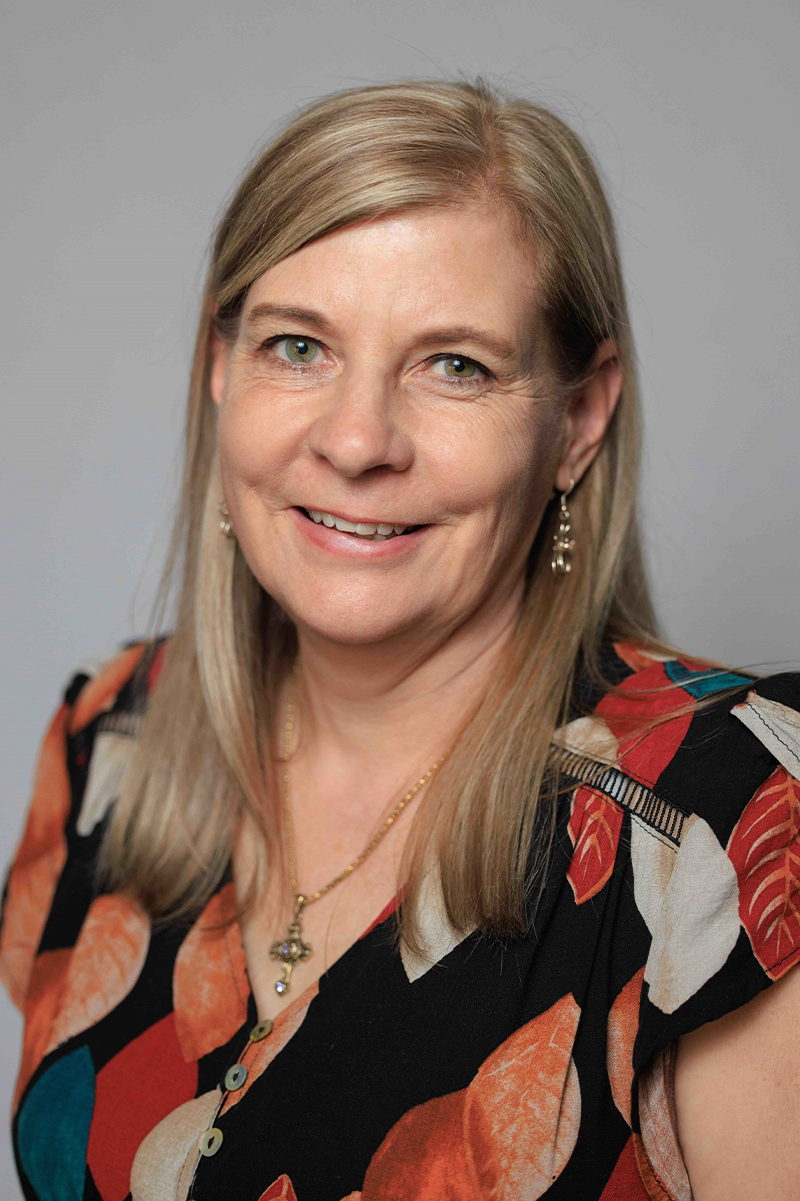
By Prof. Linda du Plessis, senior deputy vice-chancellor of the North-West University (NWU).


