
The North-West University (NWU) strengthened its commitment to entrepreneurship, innovation and the commercialisation of indigenous knowledge systems (IKS) through the CoachLab 2026 Entrepreneurship Programme, held from 3 to 7 August 2026 at the Molelwane Farm at the Mahikeng Campus.
The five-day programme brought together students and aspiring entrepreneurs for an intensive learning experience designed to equip them with practical knowledge, entrepreneurial skills and an understanding of how innovative ideas can be transformed into sustainable products and businesses.
The programme was hosted through the NWU Centre for Indigenous Knowledge Systems (CEIKS) and formed part of an initiative aimed at developing entrepreneurial thinking and supporting participants in moving from ideas and products to viable market opportunities and sustainable businesses.
Creating a platform for entrepreneurial thinking
Welcoming participants to the programme, Dr Motheo Motheo, director of CEIKS, encouraged students to embrace the opportunity to learn, engage and think differently about entrepreneurship and innovation.
The programme was structured around three key areas: the product, the market and the business. This approach provided participants with a progressive learning journey, beginning with the identification and development of products and ideas, followed by understanding markets and customers and ultimately focusing on building sustainable businesses.
During the first two days, participants explored the product, covering areas such as product identification, entrepreneurial journeys and mindsets, opportunity identification, idea generation and the innovation value chain. The programme also introduced participants to funding opportunities, including grants, development finance institutions, working capital, bootstrapping and validation capital.
Intellectual property was also highlighted as an important component of entrepreneurship, with participants engaging with strategies for protecting their intellectual property. The module included practical group work, case studies and mentoring, allowing participants to apply the concepts discussed during the sessions.
From products to markets
The programme then moved into the market, where participants explored how to understand customers and identify opportunities in the marketplace.
Sessions covered market identification, customer needs, market segmentation, targeting, positioning and value propositions. Participants were encouraged to move beyond simply having a product and to understand who their customers are, what they need and how their businesses can create value.
Participants also examined market penetration strategies, including routes to market, distribution channels, customer acquisition, partnerships and market-entry approaches. Marketing, digital marketing, customer engagement and ethical marketing were among the other areas covered.
Branding was another important component, with discussions focusing on brand identity, brand promises, business reputation and the importance of communicating a consistent brand.
A particularly significant component of the programme was its focus on the Pan-African business context and the commercialisation of indigenous knowledge systems. Participants explored the socio-economic and political realities influencing African markets, as well as cultural and contextual considerations. They were also introduced to approaches for commercialising IKS while recognising community value, heritage and ethical considerations.
Building sustainable businesses
The final stage of the programme focused on the business, helping participants understand the practical requirements of transforming a market opportunity into a sustainable enterprise.
Participants engaged with topics including business registration in South Africa, business structures, registration processes, documentation, tax obligations, record-keeping, employment and human resources regulations and other compliance requirements.
The programme also emphasised the importance of values and ethics in business. Participants explored ethical leadership, organisational values, codes of conduct, vision and mission development, and how strategic direction can be aligned with market needs.
The Pan-African dimension continued into the business module, with participants considering how Pan-African principles can support collaboration, market development and value creation.
Students challenged to become agents of change
Closing the five-day programme, Dr Joe Molete, deputy vice-chancellor for student life, transformation, people and culture with the assigned function of the Mahikeng Campus, challenged the participating students to recognise the important role they can play in shaping the future.
Dr Molete motivated the students to become agents of change, emphasising that they are the future leaders who will influence the direction of society and the economy.
He encouraged them to believe in their ideas and to use their creativity and innovation to address challenges facing their communities and the country. He reminded the students that the innovative ideas being developed today have the potential to become solutions for tomorrow.
His message reinforced the broader purpose of CoachLab: to move students beyond being recipients of knowledge and to empower them to become creators, innovators, entrepreneurs and problem-solvers.
Turning ideas into impact
CoachLab 2026 demonstrated the importance of creating platforms where students can explore entrepreneurial ideas, develop products, understand markets and acquire the knowledge needed to establish sustainable businesses.
Through its focus on products, markets, business development and indigenous knowledge systems, the programme provided participants with a holistic understanding of the entrepreneurial journey.
The five-day programme further reinforced the commitment of the NWU to nurturing innovation and entrepreneurship among its students and creating opportunities for young people to contribute meaningfully to economic and social development.
As the students return to their respective academic and entrepreneurial environments, the challenge is now to put their learning into action, transforming ideas into products, products into businesses and businesses into solutions that can create lasting impact.
For these emerging entrepreneurs, the future is not simply something to wait for. It is something they have to create.
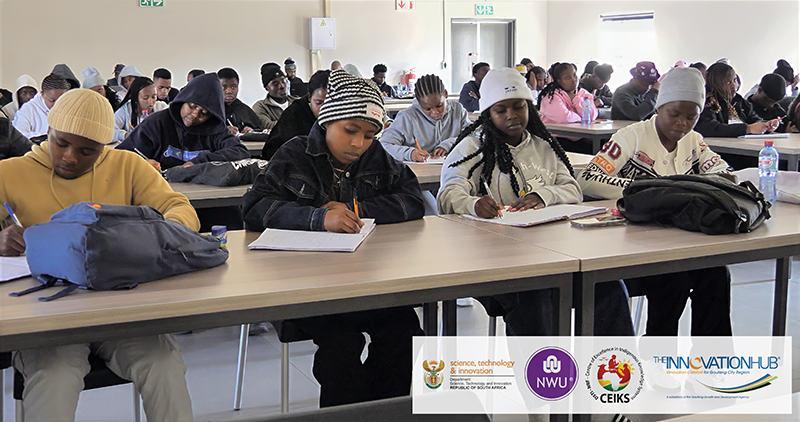
The CoachLab 2026 Entrepreneurship Programme brought together students and aspiring entrepreneurs for an intensive learning experience.


