
As South Africa commemorates Workers’ Month, second-year personnel psychology students at the North-West University (NWU) transformed theory into practice through an engaging and thought-provoking classroom initiative focused on the theme: Rewards and Remuneration in the Workplace.
The initiative, led by lecturer Kholiswa Mogoeng, created a dynamic platform for students to debate, analyse and act out real-life workplace scenarios linked to employee rewards, compensation and performance management across different industries.
The activity formed part of the Personnel Psychology module and aimed to help students understand the practical realities surrounding employee motivation, fair remuneration and organisational performance. Through presentations, role plays and debates, students explored how rewards and remuneration influence employee behaviour, satisfaction, productivity and retention in organisations.
According to Kholiswa, the initiative was introduced to bridge the gap between theory and practice, while encouraging students to critically engage with current workplace challenges affecting employees in South Africa.
“Workers’ Month provides an important opportunity for students to reflect on the realities faced by employees in different sectors. The purpose of this initiative was to expose students to practical human resource challenges and encourage them to think critically about how organisations can create fair and motivating work environments,” she said.
Students presented industry-based scenarios reflecting current challenges experienced by employees in sectors such as healthcare, information technology and general organisational environments. The presentations stimulated meaningful discussions around equity, employee well-being, recognition, performance management and workplace satisfaction.
Madumo Neo summarised the importance of rewards and performance management by explaining that fair rewards motivate employees, improve retention and ultimately contribute to stronger organisational performance and service delivery. Her presentation reinforced the importance of organisations investing in equitable and performance-based reward systems to build productive and committed employees.
Similarly, Mazibuko Yaya highlighted that fair rewards and competitive remuneration help employees feel valued, motivated and committed to organisations, while poor reward systems contribute to dissatisfaction and increased employee turnover.
Focusing on the information technology sector, Monama Buwang explained that effective rewards and remuneration structures help IT specialists feel recognised and motivated, while poor reward systems and outdated workplace systems increase frustration, dissatisfaction and employee turnover in organisations.
One of the most impactful presentations focused on the nursing profession, where Wanyane Chockie addressed the importance of rewards and remuneration in the healthcare sector. He explained that nurses often work under difficult conditions characterised by long working hours, staff shortages, emotional pressure and heavy workloads.
The presentation emphasised that remuneration should extend beyond salaries to include overtime payments, rural allowances, uniform allowances, career development opportunities, bonuses and recognition for specialised nursing skills. Students also linked the discussion to current challenges facing the Department of Health in South Africa, where concerns over salary adjustments, delayed payments, workload pressures and employee benefits continue to affect healthcare workers.
The debate further explored how poor remuneration and stressful working conditions contribute to the migration of skilled nurses to the private sector and international healthcare institutions in search of better opportunities. Students reflected on the broader implications this has for service delivery and employee retention within the public healthcare system.
The classroom activity created an interactive learning environment in which students applied theoretical concepts to practical organisational situations. By acting out workplace scenarios and debating real-life challenges, students developed critical thinking, communication, teamwork and problem-solving skills essential within the human resource management profession.
The initiative also aligned with the broader purpose of Workers’ Month by recognising the contribution of workers across different sectors and promoting conversations around fair treatment, dignity and employee well-being in the workplace.
Through innovative teaching approaches such as these, the Personnel Psychology module continues to equip students with practical knowledge and professional skills needed to navigate the evolving world of work and contribute meaningfully to future workplaces.
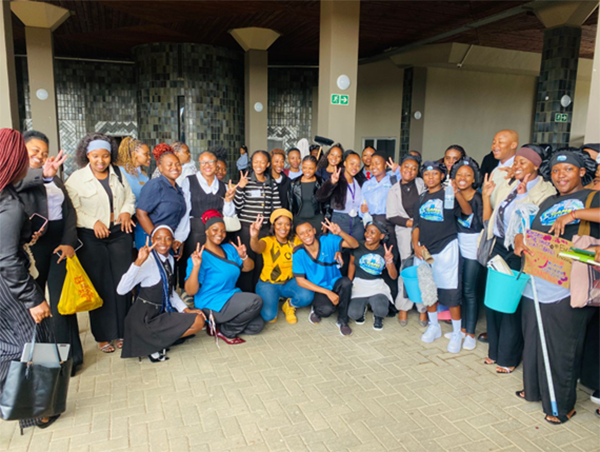
Second-year personnel psychology students at the NWU transformed theory into practice through an engaging and thought-provoking classroom initiative.


