
Chris Williams, director for student life at the North-West University’s (NWU’s) Vanderbijlpark Campus, recently played a leading role in advancing conversations around men’s mental health and emotional well-being during “The Mindful Man – Men’s Summit”, hosted by the National Association of Student Development Professionals (NASDEV) in collaboration with the Vaal University of Technology.
Held at the Quest Conference Centre in Vanderbijlpark, the summit brought together students, student leaders and higher education professionals from institutions including the NWU, the University of Johannesburg and the University of Pretoria. The goal was to engage in critical discussions around masculinity, emotional wellness, leadership and the growing mental health challenges affecting young men in higher education.
The summit aimed to create a safe space for honest dialogue and shared experiences, while challenging harmful stereotypes that often discourage men from expressing vulnerability or seeking help. Throughout the programme, conversations focused on emotional resilience, healthy masculinity, healing, accountability and personal growth.
Chris, who is also a member of NASDEV and an industrial psychologist by training, participated as a panellist during the discussion themed “Men and Mental Health – The Silent Struggle”. Drawing from his professional background, he unpacked the psychological realities many young men silently battle with, including denial, emotional dissociation, destructive coping habits and emotional suppression caused by societal expectations around masculinity.
According to Chris, many men have been conditioned to internalise pain and hide emotional struggles in fear of appearing weak.
“Men’s health is not just a personal issue anymore – it is becoming a higher education crisis that institutions can no longer afford to ignore. Too many young men are carrying emotional pain, depression, anxiety, trauma and pressure in silence because society has taught them that vulnerability is weakness.
“As men, we are often conditioned to suppress emotions, to ‘man up’, to suffer quietly and to believe that asking for help somehow makes us less masculine. That mindset is dangerous because silence often becomes the breeding ground for emotional breakdown, destructive behaviour, substance abuse and even suicide,” said Chris.
“We need to intentionally create spaces where men feel safe enough to speak honestly about what they are going through without fear of judgement or ridicule. Healing begins when men realise they do not have to carry every burden alone. Become your brother’s keeper. Check in on your friends. Ask difficult questions. Validate your emotions and allow yourself to be vulnerable. Real strength is not found in pretending to be okay – it is found in having the courage to seek help, to confront pain and to start healing.”
Chris further stressed that building emotional resilience starts with self-awareness, self-compassion and strong social support systems.
“Many men struggle because they isolate themselves emotionally. Healthy friendships, community support and meaningful conversations are critical for emotional well-being. We need to teach young men that taking care of their mental health is just as important as taking care of their physical health. A healthy man is emotionally aware, accountable, compassionate and unafraid to ask for support when he needs it,” he added.
The programme featured several keynote discussions and breakaway sessions focused on leadership, legacy, entrepreneurship, family financial planning, accountability and career direction. A central discussion explored why many men avoid seeking professional help, the realities of depression and suicide among men and practical coping strategies for emotional resilience.
Chris joined a diverse group of speakers and contributors committed to promoting wellness and transformation among young men. Other contributors addressed students on visionary leadership, accountability and legacy-building, while discussions on breaking gender stereotypes and cultural expectations challenged harmful perceptions of masculinity and emotional expression.
He said that, for the NWU, his participation at the national summit reflects the continued commitment of the university to student wellness, holistic development and creating supportive campus environments where mental health conversations are encouraged rather than silenced.
Chris added that as mental health challenges continue to affect students across higher-education institutions, platforms such as “The Mindful Man - Men’s Summit” remain essential in breaking stigma, encouraging emotional openness and reminding young men that seeking help is not weakness, but an important step towards healing and growth.
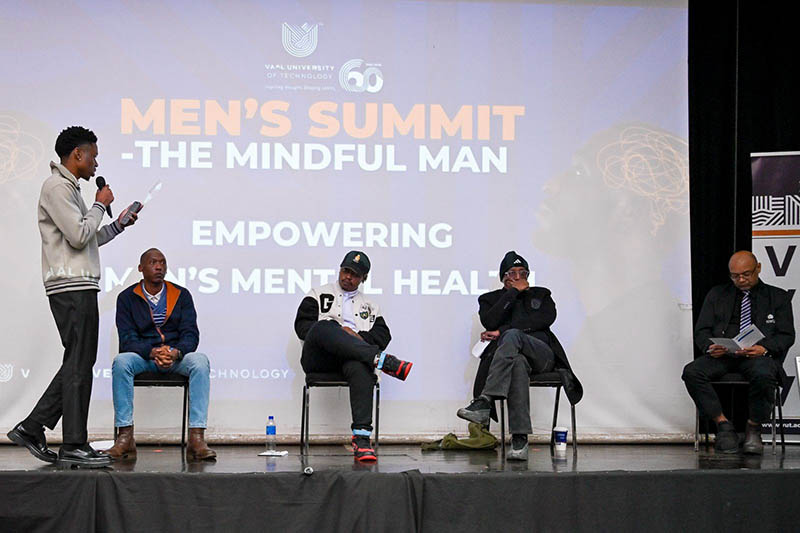
Chris Williams, director for student life at the NWU’s Vanderbijlpark Campus (far right), participates as a panellist during the discussion “Men and Mental Health – The Silent Struggle”.


