
South Africa’s wildlife is one of its greatest tourism assets. Every year, visitors travel from across the world to experience animals roaming freely in the country’s national parks, nature reserves and private conservation areas. Yet hidden within these landscapes is a largely unseen threat: bushmeat poaching using wire snares, packs of dogs and other unlawful methods.
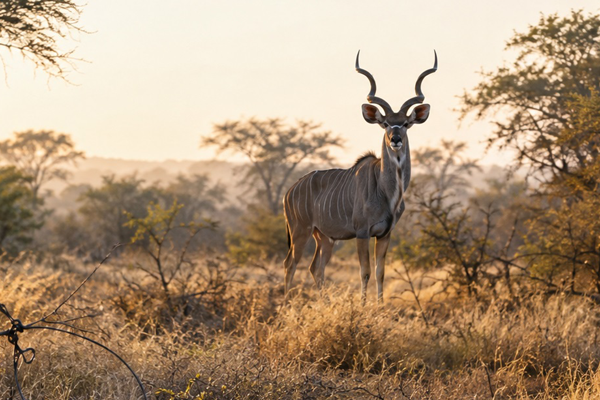
Snares do not distinguish between species, age or conservation status, while hunting dogs can pursue, injure and kill wildlife across large areas. Animals that escape from snares may remain trapped in tightening loops of wire, leaving them with deep wounds, infections or injuries that eventually prove fatal.
According to Prof. Peet van der Merwe of the Tourism Research in Economics, Environs and Society (TREES) research unit at the North-West University (NWU), the consequences extend far beyond the individual animals that are killed or maimed.
By depleting wildlife populations, disturbing natural behaviour, reducing the prey available to predators and placing vulnerable species under further pressure, bushmeat poaching threatens the quality of the wildlife experiences on which South Africa’s tourism reputation depends. It also places growing pressure on the reserves, tourism businesses and communities whose income and employment rely on healthy, thriving ecosystems.
The threat is neither theoretical nor confined to one part of the country. Research and conservation reports have documented snaring in national parks, provincial reserves, private conservation areas and on farmland. The Endangered Wildlife Trust describes snaring as one of the most prominent threats to wildlife nationwide and the most common form of poaching.
SANParks has reported that snares are an increasing problem in the Kruger National Park, where African wild dogs are among the animals caught. In the Western Cape, research cited by CapeNature found that porcupines and small antelope—including duiker, klipspringer and grysbok—were among the animals most commonly captured. These species are also important prey for predators such as leopards.
This creates a damaging chain reaction. When prey populations decline, predators are left with less natural food. Some may disappear from affected areas, while others may increasingly target livestock, intensifying conflict with farmers and surrounding communities. For tourism, the result is a poorer wildlife experience and a gradual erosion of the natural abundance that attracts visitors.
“For those involved in bushmeat poaching, the issue often comes down to food security. Wildlife is poached, firstly, to provide food and, secondly, as a source of income, with the meat sold in local markets and communities,” explains Prof. Van der Merwe.
He says anti-poaching experts working in and around the Kruger National Park regard the bushmeat trade as an enormous and pervasive challenge, even though rhino poaching receives considerably more public attention.
“Rangers patrol the park daily in search of snares, but removing them is both difficult and dangerous. Some of these poachers are armed and are not averse to shooting when confronted.”
The use of dogs presents an additional challenge. Unlike a stationary snare, dogs can chase animals over considerable distances and across property boundaries, causing exhaustion, injury or death. Their use also makes bushmeat poaching difficult to contain, particularly across South Africa’s vast rural landscapes.
“The use of dogs in bushmeat poaching is also very problematic, especially in rural areas away from heavily populated areas,” says Prof. Van der Merwe.
Although some bushmeat poaching is driven by immediate household need, conservation organisations warn that it cannot always be viewed as a low-impact subsistence activity. Bushmeat may also be sold through informal markets, turning the killing of wildlife into a source of commercial income. Persistent poaching can therefore remove animals faster than populations are able to recover.
“The economic consequences reach well beyond the boundaries of parks and reserves. Wildlife tourism supports accommodation establishments, guides, restaurants, transport providers, conservation workers and local suppliers. Parks and private reserves must also devote money and personnel to patrols, snare removal, veterinary treatment and security—resources that could otherwise support conservation and tourism development,” he explains.
Addressing the problem will therefore require more than removing snares or arresting individual poachers. Effective law enforcement and well-resourced anti-poaching operations remain essential, but lasting progress will also depend on reducing demand for illegally obtained meat and creating viable alternatives for communities affected by poverty, unemployment and food insecurity.
He further states that communities living alongside parks and reserves must experience tangible benefits from conservation and tourism. Employment, local procurement, skills development, community-owned tourism enterprises and improved access to affordable food can give people a meaningful stake in protecting the wildlife around them. Cooperation between conservation authorities, tourism operators, landowners, law-enforcement agencies and communities will be crucial.
South Africa cannot market itself as one of the world’s leading wildlife destinations while allowing the animals at the heart of that promise to disappear silently into snares or be pursued by hunting dogs. As Prof. Van der Merwe warns: “Protecting wildlife is not only a conservation responsibility; it is an investment in tourism, rural livelihoods and the country’s international reputation. If the wildlife disappears, the tourists—and the opportunities they create—may follow.”


