
In an effort to continuously pave the way towards building sustainable communities, the Faculty of Law’s Chair in Cities, Law and Environmental Sustainability (CLES), funded by the National Research Foundation (NRF) as part of its South African Research Chair Initiative (SARChI), recently held its second critical conversation of the year.
Themed “Reimagining a Just Urban Future: Democracy, Inclusivity and Politics”, the webinar demonstrated the importance of including communities in decision-making to help design solutions to social divides.
The two esteemed guests, Ms Peta Wolpe, director of Tournesol, and Prof Fiona Anciano, who leads the Politics and Urban Governance group at the University of the Western Cape, challenged the attendees to consider what a just urban future might look like.
“People are infrastructure”
Professor Fiona Anciano argued that justice must extend to every aspect of urban life, including housing, water, sanitation, transport, and economic opportunity.
“Our focus is on how to govern cities in ways that are environmentally sustainable, socially just, and economically fair,” she said.
According to Prof Anciano , real change is not just about deciding what should change, but also about how change happens.
Speaking about ongoing research in informal settlements in Johannesburg and Cape Town, Prof Fiona demonstrated how small business owners navigate the daily struggles to access clean water and electricity. Using photovoice, the residents documented the realities of reusing water and sharing limited resources, thereby developing innovative survival strategies.
Prof Anciano argued that neighbourhood networks, local leadership, community organisations and everyday relationships are just as vital as the electricity grids and water pipelines that make cities function.
“People are actually infrastructure,” she said. “Instead of viewing residents merely as recipients, they should be recognised as active participants in shaping cities.”
She also noted that civil society organisations, local committees and religious groups often influence who can access scarce resources. According to Prof Anciano, these informal systems operate alongside what she termed ‘hybrid governance’.
“Technical policy solutions and formal participation are insufficient for just, sustainable planning,” she argued. “Even the best-designed policies often fail when they ignore how people actually live and interact with infrastructure.”
Inequality should also be addressed
During her presentation, Ms Peta Wolpe focused on exploring the consequences of climate change, inequality, and poverty. Despite the expansion of electrification, she argued that access to basic energy does not guarantee dignity.
“Energy poverty is fundamentally about affordability,” she explained. “Low-income households spend a far greater proportion of their income on energy than wealthier families.”
Turning to the topic of gender, Ms Wolpe declared that it remains overlooked in these conversations, despite its significant influence on how communities experience energy security and climate change.
“The just transition discourse has overlooked gender and inequality, thereby risking the worsening of systematic inequalities,” she warned.
Although South Africa has developed policies in support of climate action, public participation and energy transition, Wolpe argued that implementing these policies remains the most difficult challenge.
“There is a disconnect between policy and implementation,” she stated, questioning why communities feel excluded from decisions that directly impact their lives.
“Communities do not just want to identify problems; they want to help design solutions,” Wolpe concluded.
The speakers collectively emphasised that reimagining South Africa’s urban future is about putting communities and their lived experiences at the centre of decision-making.
YouTube Video: CLES Critical Convo 2 | 24 June 2026: Reimagining a just urban future.
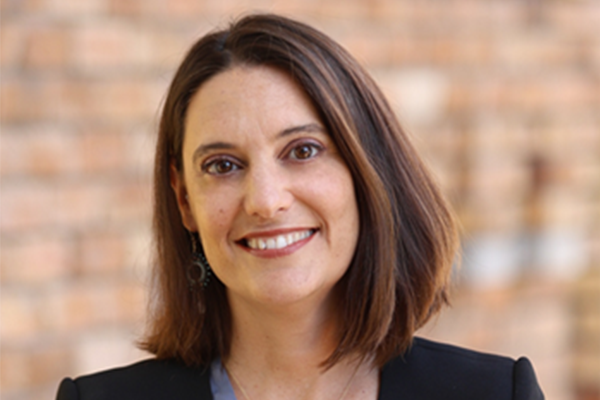
Prof Fiona Anciano
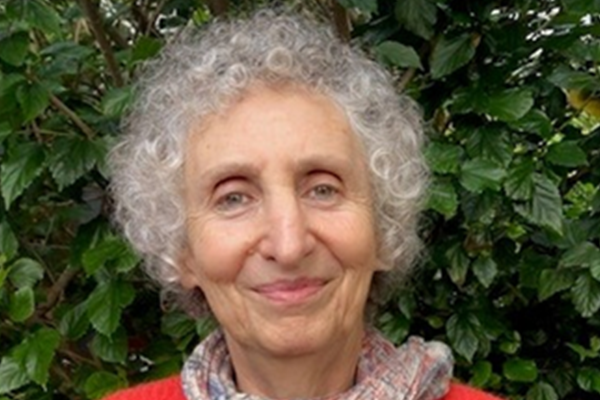
Ms Peta Wolpe


