
Communities across South Africa continue to face water shortages and power cuts, but Auditor-General Tsakani Maluleke says the reasons behind these failures are simpler than most people think.
Speaking at the Public Financial Management guest lecture, hosted by the School of Government Studies on Monday 11 May, she said that municipalities mainly collapse due to poor financial management, the wasteful use of resources, human behaviour, and procurement failures.
According to Maluleke, many municipalities struggle to collect money owed to them. They rely on rates, taxes, and service charges to fund basic services such as water and electricity. She warned that, without proper revenue collection, municipalities will struggle to maintain infrastructure and deliver services effectively.
“Municipalities may run out of money because they are not collecting its rates, taxes and service charges properly,” she explained.
Systems are not effectively managed
Maluleke said that too much of municipal budgets is being spent on salaries and wages instead of on actual service delivery, highlighting that while staffing is necessary, spending too much on wages leaves little for operational costs.
“A varying proportion of a municipal budget is often spent on salaries and wages, leaving insufficient funds to purchase water from the water board and maintain a reliable supply of good-quality water,” she said.
She added that when municipalities fail to comply with procurement regulations, public funds are wasted on overpriced goods and poor-value contracts.
“When procurement processes are not managed properly, you simply end up overpaying by a large margin. The money that should have been adequate to provide services is then leaked out of the system.”
Maluleke referenced recent news24 reports on diesel supply problems as an example of how poor procurement drains municipal budgets while communities continue to suffer from poor service delivery.
Unethical conduct among public officials
Maluleke also warned that South Africa’s service delivery crisis is often caused by the officials who are trusted to maintain and manage public resources. According to Maluleke, the failure of basic services begins with a lack of ethics, responsibility, and accountability within municipalities.
“There may be nothing wrong with the infrastructure, processes, programmes, policies, or rules. But at the heart of our problem is human behaviour. People who are employed to do a particular job approach it in a way that is negligent, malicious, and characterised by incompetence.”
She added that ethical failures in public services have created a culture in which misconduct is normalised, which has weakened municipal performance and governance.
Maluleke emphasised that public officials are frequently not held accountable, and that ignorance of regulations will continue to undermine municipalities nationwide.
“Most municipalities continue to perform poorly, with widespread irregular spending, weak internal controls, failure to follow the law, poor record keeping, and little accountability for misconduct,” she stated.
Non-compliance can lead to large-scale corruption
“Some of the biggest corruption scandals we have seen in the country started with seemingly minor issues,” Maluleke stated. “We raised concerns and said, ‘Check,’ but when those warning signs are ignored, billions can be lost through contracts given to people who should never have received them in the first place.”
“When non-compliance is ignored, it creates a culture where contracts are awarded to the wrong people, projects fail, services are delayed, and communities ultimately suffer the consequences,” Maluleke concluded.
Prof Melvin Diedericks, Director of Government Studies, gave the vote of thanks. He acknowledged all esteemed guests and reminded the students that they are the country’s future public servants and leaders.
“We rely on you to take the country forward. Remain diligent and committed to your studies. Set your goals, plan how to achieve them, and you will indeed flourish in the future.
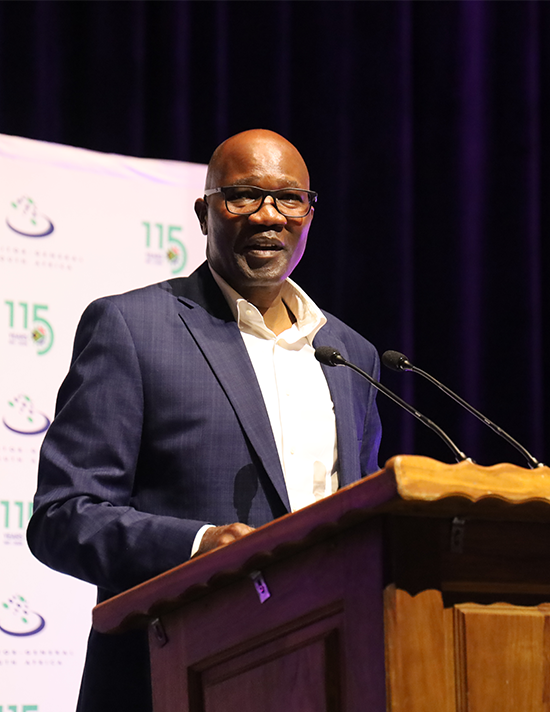
Prof Dumi Moyo, Executive Dean of the Faculty of Humanities, welcomes the Auditor-General
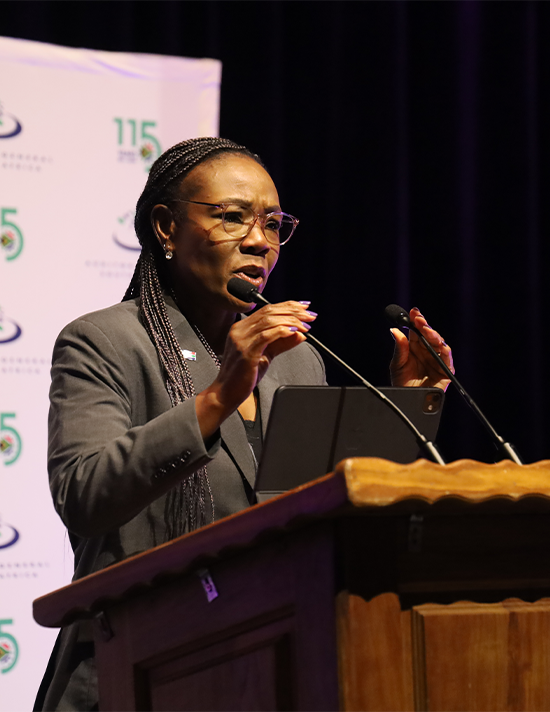
Auditor-General Maluleke says that inefficiency within municipal structures contributes significantly to service delivery failures
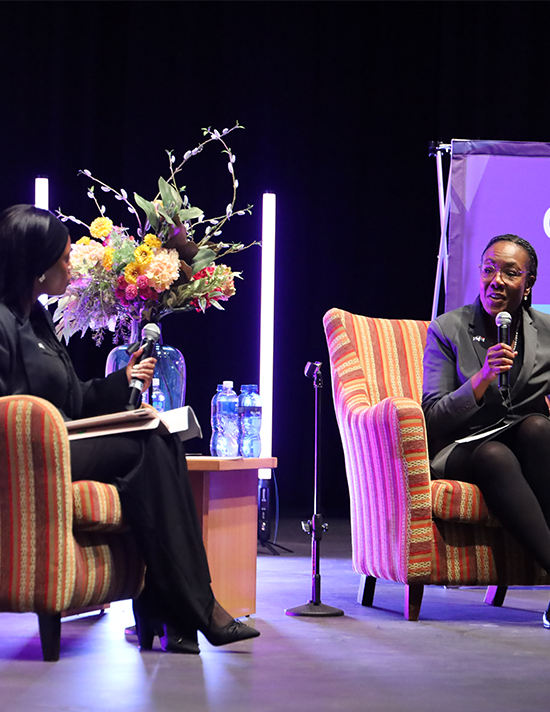
Koketso Chigazana, (left) the Academic Officer at the NWU Potchefstroom Campus, sits down with the Auditor-General Maluleke (right) for an interactive session


