By: Phenyo Mokgothu and Sthembiso Seyama
Four new books are adding to the growing body of scholarship on indigenous knowledge systems (IKS), with the North-West University (NWU) alumnus Dr Monicca Thulisile Bhuda bringing together research on education, healthcare, sustainability and African knowledge.
Published by IGI Global Scientific Publishers in July, the four edited volumes carry a 2027 copyright and are indexed on Scopus. They feature contributions from scholars across the world and examine how indigenous knowledge can contribute to contemporary social, educational and environmental challenges.
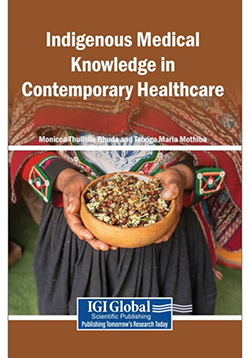
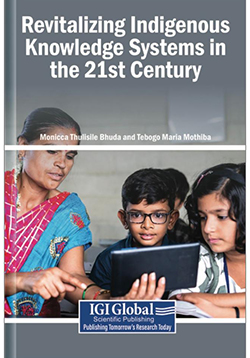
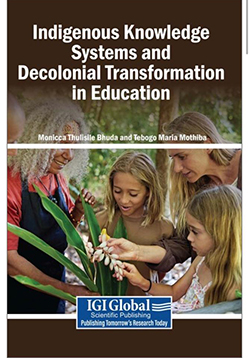
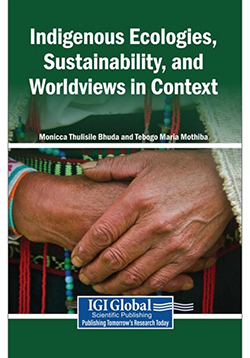
The titles are Revitalizing Indigenous Knowledge Systems in the 21st Century, Indigenous Knowledge Systems and Decolonial Transformation in Education, Indigenous Medical Knowledge in Contemporary Healthcare, and Indigenous Ecologies, Sustainability, and Worldviews in Context.
For Dr Bhuda, the publications form part of a wider effort to ensure that indigenous knowledge is recognised, documented and applied in academic and public spaces.
“These books contribute to the continuing conversation about the place of indigenous knowledge in addressing contemporary challenges,” says Dr Bhuda. “They also create a platform for scholars to engage with knowledge systems that have often been marginalised in mainstream academic discourse.”
Her academic journey has strong roots at the Mahikeng Campus of the NWU, where she completed her first three degrees. She was the first student to graduate cum laude from the first Bachelor of Indigenous Knowledge Systems (BIKS) programme in Africa offered at the NWU.
She later completed a master's degree and a PhD in social sciences, focusing on IKS, at the NWU. She was also the first person from her original undergraduate graduating group to earn a doctorate.
The university later recognised her contribution to indigenous knowledge through an NWU Alumni Excellence Award.
“My journey at the NWU played an important role in shaping the scholar I have become,” she says. “It provided an academic space where indigenous knowledge could be studied, questioned and positioned as an important field of scholarship.”
Dr Bhuda is now pursuing a second PhD in African languages at the University of KwaZulu-Natal. She also lectures in culture and heritage studies at the University of Mpumalanga, where she coordinates a programme focusing on African history, heritage and identities.
Her work extends beyond universities. She serves on the South African national panel of advisers to the Department of Sport, Arts and Culture on indigenous knowledge and living treasures. In 2026, she was appointed to the National Heritage Council.
Dr Bhuda has produced more than 40 scholarly articles, with much of her work focusing on indigenous scholarship, cultural heritage and Ndebele culture.
Her efforts to preserve indigenous knowledge also extend to younger readers. In 2021, she published the Ndebele children's book Umgwalo Bobukgwhari bakaKwekwezi (Kwekwezi's Cultural Mural Art). The book draws inspiration from Ndebele mural traditions associated with artists such as Dr Esther Mahlangu.
Her work has earned recognition that includes the Voice of Heritage Award from the National Heritage Council and acknowledgement from the Pan South African Language Board for her contribution to indigenous languages and culture.
Dr Bhuda says the four new publications are not simply about preserving knowledge from the past.
“Indigenous knowledge must remain part of how we understand and respond to the world around us,” she says. “Its value lies not only in preserving heritage, but also in ensuring that African knowledge continues to inform education, health, sustainability and future generations.”