
As artificial intelligence (AI) reshapes global communication, the question on the lips of African academics is this: how can indigenous African languages remain visible and relevant in the digital age?
Exploring answers to this question is the point of a two-day symposium that the Indigenous Language Media in Africa (ILMA) research entity of the North-West University (NWU) will be hosting in Boksburg on 25 and 26 August.
Being held under the theme "Legends of the past, present and tomorrow", the symposium commemorates the 10th anniversary of ILMA and will focus on indigenous journalism, digital media, storytelling, language preservation and artificial intelligence.
Past, present and tomorrow
Since ILMA was officially established by the NWU Council in June 2016, it has become a recognised centre in Africa for scholarship on indigenous language media.
ILMA is the only research entity on the African continent dedicated exclusively to the study of indigenous language media across print, broadcasting, digital and other communication platforms, according to ILMA director Prof. Abiodun Salawu.
He says the anniversary presents an opportunity to celebrate the entity`s achievements while creating space for innovative ideas and collaborations.
"There could be no better way of marking this important anniversary than to host a symposium where scholars and practitioners in indigenous language media, minority language media and ethnic media can come together to showcase their research," he says.
First port of call for scholars
"We have established ourselves as a centre that scholars can contact whenever they want to undertake research related to African language media. Through our publications, our students and our collaborations, we have become the go-to research entity in this field," Prof. Salawu says.
ILMA has trained postgraduate students from South Africa, Nigeria, Zimbabwe, Malawi and other African countries while also hosting postdoctoral fellows from Asia. Its researchers have produced books, journal articles, book chapters and conference papers that have helped expand a field that previously received limited scholarly attention.
Prof. Salawu says the growing participation of researchers from different countries reflects increasing recognition of indigenous language media as an important area of study. "There has been an upsurge in African language media scholarship both in Africa and outside of it. We hope this symposium will further popularise the field and encourage discussions on how indigenous language media can contribute to development."
The discussions will also focus on strengthening the digital presence of African languages at a time when AI is transforming news production and communication.
"Without a language being available in the digital space, it becomes difficult to use it for AI, automated and journalism,” says Prof. Salawu. “We hope this symposium will contribute to strengthening the digital presence of African languages."
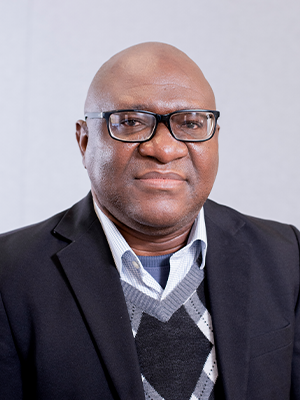
Prof. Abiodun Salawu.


