
The North-West University (NWU) has reached a decisive milestone in establishing the Desmond Tutu School of Medicine following the accreditation of its Bachelor of Medicine and Bachelor of Surgery (MBChB) programme by the Higher Education Quality Committee (HEQC) of the Council on Higher Education (CHE).
The CHE confirmed the accreditation in correspondence dated 21 August 2026. The six-year, 940-credit programme will be offered in contact mode at the Potchefstroom Campus.
For Prof. Binu Luke, inaugural chief director of the Desmond Tutu School of Medicine, the decision represents both an institutional achievement and the culmination of an immense collective effort.
“The accreditation of our MBChB programme by the Council on Higher Education is a major milestone in the development of the programme,” he says.
“More than excitement, there is a sense of relief because accreditation by the CHE is a crucial step in our progress towards establishing the school.”
The achievement follows an extensive process of planning, coordination and documentation involving teams across the university. According to Prof. Luke, the application required detailed evidence of how the school and its medical programme would function, covering everything from its curriculum and governance to its clinical training arrangements, staffing, finances and infrastructure.
“There is certainly excitement because this is the result of extensive hours of planning, organisation and implementation across our five workstreams,” he says.
“These workstreams cover defining the ‘North-West doctor’, preparing the clinical training platform, human resources and financial matters, infrastructure, governance, and curriculum development and mapping.”
Translating years of preparation into a comprehensive accreditation application was itself a demanding undertaking.
“Documenting all these activities, completing the relevant forms and providing the required portfolio of evidence was no mean feat,” says Prof. Luke.
“Credit must go to the core team, as well as to all the relevant entities within the university that supported this project.”
The CHE’s correspondence confirms the programme’s full accreditation and that all stipulated conditions have been met. The process of registering the qualification with the South African Qualifications Authority (SAQA) on the National Qualifications Framework (NQF) is now under way.
The accreditation process included the submission of detailed information about clinical rotation modules, assessment practices, exit-level outcomes and opportunities for articulation within and across the university.
Prof. Luke compares the establishment of the medical school to the journey from conception to birth, with accreditation representing the point at which the vision has become viable and the university must carry it through to completion.
“If we compare this process to pregnancy and delivery, from conception to a full-term birth at approximately 40 weeks, this milestone represents the point of viability, which we would regard as about 28 weeks,” he says.
“From now on, there is no turning back. We must continue and deliver the fully developed school in January 2028.”
The Desmond Tutu School of Medicine is set to become South Africa’s 11th medical school and plans to welcome its first cohort of students in 2028. Its development forms part of the NWU’s commitment to addressing the country’s healthcare workforce needs and strengthening healthcare delivery, particularly in underserved communities.
Several important steps must still be completed before the first students begin their studies. Among these is professional accreditation by the Health Professions Council of South Africa (HPCSA).
“There are still several activities that we need to complete. The next major milestone is accreditation by the HPCSA, which is essential for our graduates ultimately to enter professional practice,” says Prof. Luke.
“We have planned the HPCSA accreditation visit for February 2027, and we hope to receive its approval so that we can begin enrolling students in the middle of 2027, with the first cohort commencing its studies in 2028.”
The university will also finalise agreements with the University of the Witwatersrand and the National Health Laboratory Service. These partnerships will support the academic, clinical and laboratory components required to train future doctors.
The school’s curriculum and clinical training model are being designed to produce doctors who are clinically competent, ethically grounded and responsive to the realities of South Africa’s healthcare system. Its approach will be guided by the values associated with its namesake, Archbishop Desmond Tutu, including compassion, justice, integrity and service.
For Prof. Luke, the CHE’s decision is not the end of the journey, but confirmation that a vision years in the making has entered a new and irreversible phase.
“This is a crucial step forward,” he says. “There is no going back. We must now continue the work and deliver the school in January 2028.”
According to Prof. Awie Kotzé, executive dean of the Faculty of Health Sciences, the milestone ushers in a new era for both the NWU and the faculty.
His work towards establishing the medical school began in 2017. It will become the sixth school within the faculty and enable the NWU to offer a comprehensive range of clinically oriented qualifications, with several additional programmes expected to be introduced in the near future.
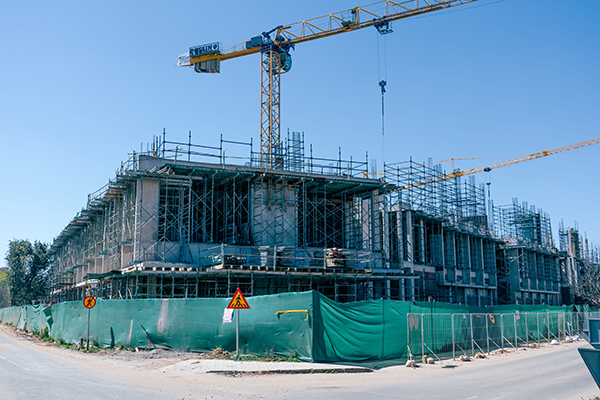

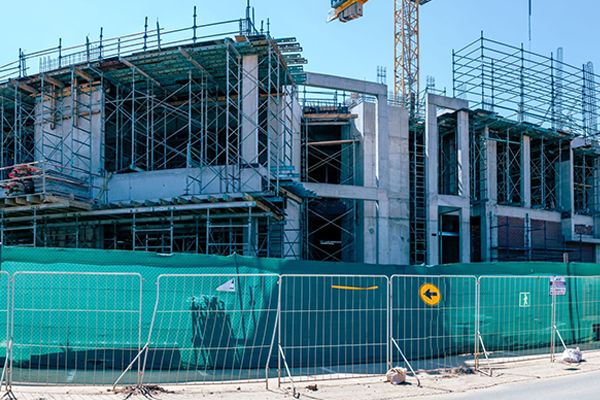
Construction of the Desmond Tutu School of Medicine is progressing on the North-West University’s Potchefstroom Campus. The new facility will support the training of the school’s first cohort of medical students, who are expected to begin their studies in 2028.


