
A childhood struggle with science has come full circle for the North-West University (NWU) academic Dr Moleboheng Mokhele. Her journey from finding the subject difficult to becoming a scientist, teacher and innovator has earned her a place among the finalists in the South African 2026 Rising Star Awards.
Dr Mokhele has been selected as a finalist in the category Services: Private and Public. For her, the recognition represents more than a career milestone. It reflects a journey that has shaped her work in early childhood STEM education and her efforts to help African children experience science through play, culture and their everyday lives.
“Being selected as a finalist is deeply meaningful to me because it represents far more than recognition for an individual achievement. It feels like everything is coming full circle,” she says.
Dr Mokhele, who is a senior lecturer at the NWU and a researcher from the Self-Directed Learning research unit, recalls being a young learner for whom science was not her strongest subject. That experience later prompted her to question why children may find science difficult and how teachers can make it more accessible.
Today, her work spans early childhood STEM education, visual literacy, indigenous knowledge systems and children’s literature. She is also the creator of Renewable Rangers, an educational game that introduces children to renewable energy through play.
Motherhood became another turning point in her approach to education. Raising her two sons, who experienced speech delays, taught her to consider the different ways children communicate and learn.
“Instead of asking only, ‘Why can my child not do this?’ I began asking, ‘What is my child trying to tell me?’ That question changed the way I understood children, learning and education,” she says.
Her experiences as a mother, scientist and researcher contributed to the development of “What a mother knows: Grounding early childhood STEM education in an African context”. The approach argues that children enter learning spaces with knowledge shaped by their culture, language, identity, experiences and communities.
Dr Mokhele believes science education should build on this knowledge rather than require children to separate their cultural experiences from what they encounter in the classroom.
“African children should not have to leave their culture at the classroom door to enter science. They should be able to bring their language, stories, experiences, curiosity and community knowledge with them,” she says.
Her approach seeks connections between science and tradition, technology and culture, and art and mathematics, with curiosity serving as a starting point for learning.
For Dr Mokhele, becoming a finalist in the Rising Star Awards also represents the possibility of showing children who struggle with science that their early experiences do not have to determine their future.
“This recognition is not simply about where I am today. It is about turning personal experience into purpose, motherhood into insight and research into innovation. It is about creating a future where more African children can see themselves in science.”
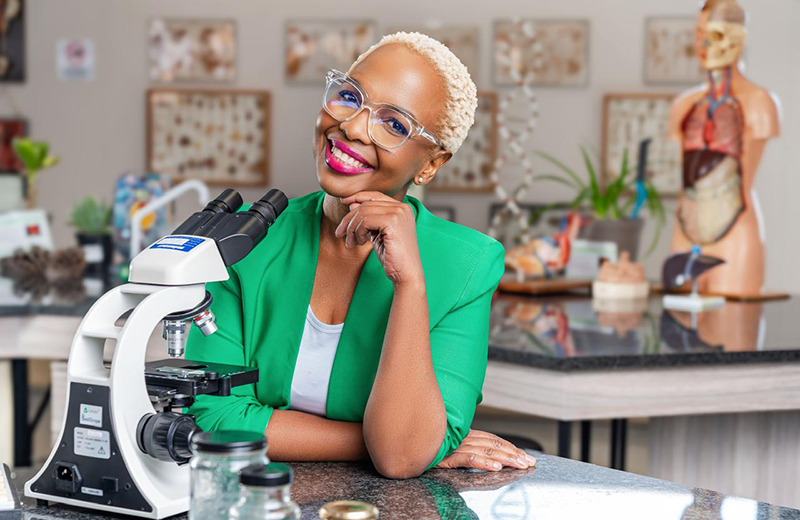
Dr Moleboheng Mokhele has been named a finalist in the category Services: Private and Public of the South African 2026 Rising Star Awards


