
South Africa’s children face increasing risks of abuse and neglect, while the professionals responsible for protecting them often work within systems that limit their ability to respond effectively.
This was the message delivered by North-West University (NWU) academic, Prof. Elmien Crofford from the Faculty of Health Sciences, during her inaugural lecture on 1 July 2026.
Her lecture, titled “It takes a village: Child protection social workers, risk, resilience and a failing system”, explored the challenges faced by child protection social workers (CPSWs) and the consequences these challenges have for vulnerable children.
Drawing from her research and years of experience as a statutory CPSW, Prof. Crofford said society cannot expect social workers to protect children without ensuring that they themselves are supported.
“Children are innocent; they cannot keep paying the price. The village, all of it, must choose to act,” said Prof. Crofford.
First-hand experience of realities on the ground
Her research journey began in practice rather than theory. Before entering academia full time, she worked in courts, homes and communities in Potchefstroom, Lutzville, Kimberley and Vanderbijlpark, where she experienced first-hand the realities of child protection work. while in academia, she continued child protection practice on a pro bono basis for Child Welfare SA in Vanderbijlpark from 2013-2025 to keep her research and teaching embedded in practice realities.
Her multi-province research programme focuses on workplace challenges, resilience and the support needs of CPSWs. Using a socio-ecological approach, Prof. Crofford’s findings show that risks affecting social workers occur at various levels, including personal, organisational, community and policy environments.
She said these risks extend beyond burnout, describing the experience of many social workers as “moral distress” – when professionals know what a child needs but cannot act because of systemic barriers.
“One of the most concerning findings from my research is that resilience has an expiry date. When leaving the profession becomes the most resilient choice available to CPSWs, we must ask: what happens to the children?”
Her work also identified weaknesses in collaboration between CPSWs and police services, including inadequate training, unclear responsibilities, limited cooperation and secondary victimisation of child victims.
“This was the starting point – focusing on CPSW-police collaboration in South Africa as one of the major weak areas of the larger system of the CPSW. Going forward we will focus on all risk factors and/or role players that present points of failure for us to address.”
Her current research focuses on unpacking the broken or weak areas in the larger system, and with the help of postgraduate students and research collaborators, she is doing research that results in practice solutions to help interrupt the system failure. “Only focusing on promoting resilience is no longer the way forward, but rather interrupting these systems weaknesses,” she said.
Prof. Crofford’s research is rooted in improving both policy and practice. In 2020, she founded and co-designed The Cave, a free online platform that provides CPSWs with legislative guidance, research-based resources and professional support.
She said child protection requires a collective effort involving social workers, police, educators, healthcare workers, policymakers and communities.
“Hence the need to precisely identify what is going wrong within these roles and relationships to develop and implement tools and interventions that can interrupt the failure and turn things around. This will enable CPSWs to do their work effectively again, so that children no longer pay the price for a failing system,” said Prof. Crofford.
“It takes a village to protect children. We must build a system that enables child protection social workers to do the work they are trained and called to do.”
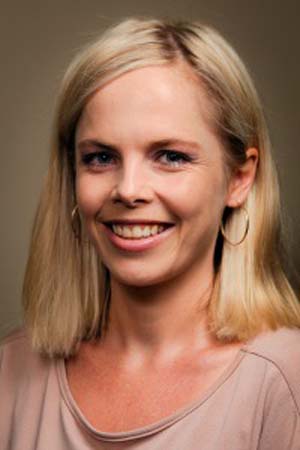
Prof. Elmien Crofford


